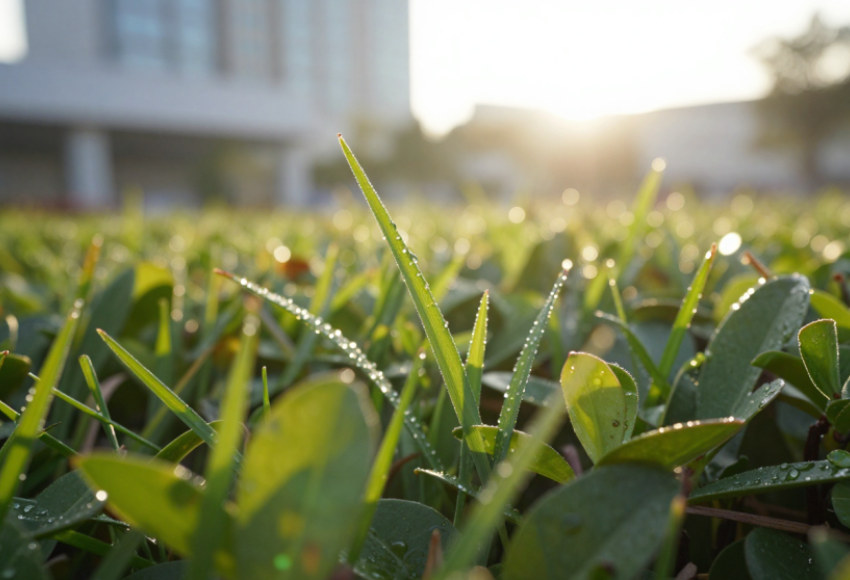
Dry conditions are making hidden irrigation problems easier to spot – and more expensive to ignore.
Across Washington, DC, Maryland and Northern Virginia, this summer’s drought is exposing a costly problem many property owners don’t discover until landscape damage has already begun: inefficient irrigation systems.
In early June, the Metropolitan Washington Council of Governments declared a regional Drought Watch covering the District of Columbia, suburban Maryland and Northern Virginia after unusually dry conditions, record spring heat and historically low streamflow. The Potomac River, the region’s primary drinking water source, reached its lowest level for that time of year based on more than a century of records, and regional officials encouraged residents and businesses to practice voluntary water conservation.
For property owners, that makes irrigation performance more important than usual.
When water is scarce and landscapes are under stress, every broken sprinkler head, leaking valve, misaligned nozzle or outdated watering schedule becomes more expensive to ignore.
For landscapes, drought conditions do not just mean drier soil. They mean less room for error. And that is where irrigation systems that have been quietly underperforming for months or even years finally get exposed.
The Most Expensive Irrigation Problems Are Often the Ones You Don’t See
Many property owners assume that if the sprinklers are running, the system is working properly.
That’s not always the case.
Broken or clogged sprinkler heads, misaligned nozzles spraying pavement instead of landscaping, leaking valves and underground piping, watering schedules that no longer match the weather, uneven coverage caused by landscape growth and outdated controllers that cannot adapt to changing conditions are all common issues.
They are also easy to miss when rainfall is doing part of the job.
That is why irrigation problems become more visible during drought. When rain is plentiful, an inefficient system can go unnoticed for a long time. When it stops, weak spots reveal themselves quickly.
Property managers begin noticing:
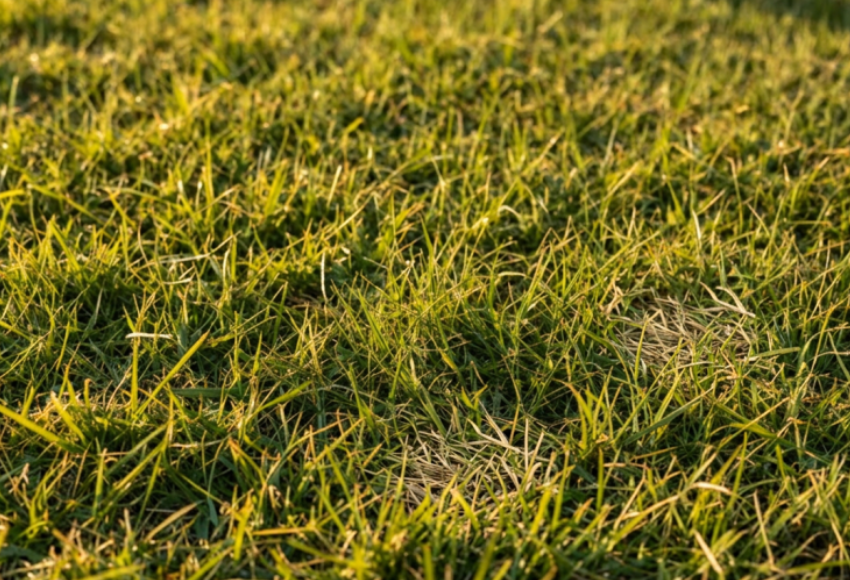
- Brown turf
- Stressed trees
- Wilting shrubs
- Thinning plant beds
- Increased weed pressure
- Dry areas near entrances and common spaces
The instinct is often to assume the property simply needs more water.
More often, the problem is not a lack of irrigation.
It is inefficient irrigation.
Trees Often Show the Hidden Costs First
Mature trees are usually the first landscape asset to reveal the cost of irrigation problems, and they are often the most expensive to lose.
A newly installed shrub may cost a few hundred dollars to replace. A mature shade tree represents years or decades of growth, along with meaningful value through shade, curb appeal, stormwater management and overall property character. Once that value is lost, it cannot be restored quickly.
When irrigation coverage fails, trees frequently experience long-term stress before other landscape materials show visible decline.
By the time thinning canopies, branch dieback, or premature leaf drop become noticeable, recovery can be difficult, costly or even impossible.
Water Waste Is a Financial Issue, Not Just an Environmental One
For commercial property owners, HOA boards, facility managers and high-end residential properties, water waste shows up directly in operating budgets.
Every gallon sprayed onto pavement, roadways, sidewalks or other non-target areas is money spent without providing any landscape benefit in return.
At the same time, underwatered areas create their own costs later:
- Plant replacement
- Additional labor
- Emergency irrigation repairs
- Turf renovation
- Landscape restoration projects
In other words, inefficient irrigation creates expenses on both ends: wasted water today and larger repair bills tomorrow.
Consider the Cost of Water Waste
Nationally, outdoor water use accounts for about 30 percent of total household water consumption, and that share climbs significantly in drier regions and on properties with more water-intensive landscaping. The U.S. Environmental Protection Agency’s WaterSense program estimates that as much as half of the water used outdoors is lost to wind, evaporation and runoff caused by inefficient irrigation methods and systems.
While every property is different, even small inefficiencies repeated day after day throughout the growing season can translate into significant utility expenses and unnecessary stress on valuable landscape assets.
Why July and August Are the Best Time to Find Irrigation Problems
Mid-summer is often the best time to evaluate irrigation performance because system deficiencies are easiest to spot under dry conditions.
A professional irrigation assessment can identify:
- Coverage gaps
- Water waste
- Leaks
- Controller programming issues
- Pressure problems
- Early plant health concerns
- Opportunities to improve water efficiency
These are often simple and affordable corrections today that can become much more expensive once landscape damage begins to spread.
Signs Your Irrigation System May Be Wasting Water
- Brown or thinning turf despite regular watering
- Sprinklers hitting pavement, sidewalks, buildings, or roadways
- Wet spots, standing water, or unusually soft ground
- Dry plant beds near entrances, signs, or common areas
- Controller schedules that have not been adjusted for current weather conditions
- Stressed trees, premature leaf drop, or canopy decline
- Areas that appear excessively green while nearby areas remain dry
- Unexplained increases in water bills
A Smart Irrigation Review Today Can Prevent Bigger Landscape Expenses Tomorrow
The landscapes performing best through this year’s drought are not necessarily the ones receiving the most water.
They are the ones using water efficiently.
With regional officials encouraging conservation and dry conditions placing additional pressure on turf, trees and plant beds, this is a practical time for property owners throughout Maryland, Northern Virginia and Washington, DC to take a closer look at how their irrigation systems are actually performing, not simply whether they are running.
If your property has not had an irrigation assessment this season, now is one of the best times to schedule one. Dry conditions make coverage gaps, leaks, pressure issues and programming problems easier to identify before they turn into plant losses, tree decline or costly restoration projects.
RASEVIC helps commercial properties, HOAs, federal facilities and high-end residential communities throughout Maryland, Northern Virginia and Washington, DC identify irrigation inefficiencies before they become expensive landscape failures. A mid-season irrigation review often pays for itself by uncovering problems that would otherwise continue wasting water, increasing costs, and damaging valuable landscape assets.
—
Sources
Metropolitan Washington Council of Governments – Regional Drought Watch declaration, June 2026, via Fairfax Water: fairfaxwater.org/news/fairfax-water-encourages-wise-water-use-officials-declare-regional-drought-watch
Virginia Department of Environmental Quality – Drought monitoring and regional drought status: deq.virginia.gov/water/water-quantity/drought
WTOP News – Regional water supply and Potomac River conditions, 2026: wtop.com/local/2026/06/fairfax-co-seeks-to-exempt-potomac-river-if-va-declares-drought-emergency-to-protect-drinking-water
U.S. EPA, WaterSense Program – “How We Use Water”: epa.gov/watersense/how-we-use-water
U.S. EPA, WaterSense Program – “Statistics and Facts”: epa.gov/watersense/statistics-and-facts