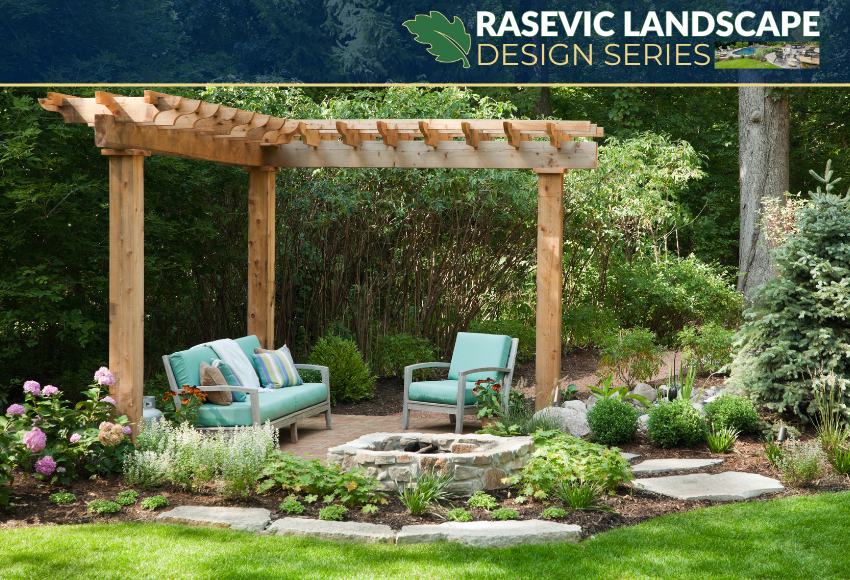
This post is the second installment in the RASEVIC Landscape Design Series (Summer Edition), a three-part look at the features that turn ordinary outdoor areas into more inviting, functional and memorable spaces. We started with water features, and now we’re moving into outdoor gathering spaces built for entertaining, before finishing with outdoor kitchens and entertainment areas designed for fall living.
Part 1: RASEVIC Landscape Design Series, Part 1: Water Features That Make Properties More Memorable
Most great outdoor spaces aren’t defined by a single showpiece feature. They’re defined by what actually happens there.
A long conversation around a fire pit. A family settling onto the patio on a Sunday afternoon. Neighbors catching up under a pergola or employees stepping outside for a break instead of staying at their desks all day. These moments don’t happen by accident. They come from design that was planned around people, not just around plants and hardscape.
A landscape shouldn’t only look good from a window. It should get used.
Why Gathering Spaces Matter
For years, most properties treated outdoor areas as decoration – a few flower beds, a stretch of lawn, a sidewalk to get from one door to another. That expectation has shifted.
Homeowners increasingly want their backyards to function as an extension of the house rather than just a view of it. Property managers are looking for amenities that get residents and tenants interacting with each other, not just walking past one another. And most people, whether they own the property or simply live or work on it, respond to outdoor space that feels like it was designed for them.
That’s what a well-designed gathering space delivers. It turns a landscape people walk through into a landscape people choose to spend time in.
Why Late Summer Is the Right Time to Plan One
Late summer is an easy season to overlook for landscape projects, but it’s actually one of the better windows to start.
Outdoor entertaining is still in full swing, which makes late summer a practical time to plan before cooler weather arrives. Patios, pergolas and other structural elements can be installed and settled in before fall gatherings, while property managers can use this window to evaluate amenities that improve resident experience and strengthen marketability heading into next year.
Starting now also means avoiding the spring rush, when everyone else on the property services calendar is trying to book the same window.
Purpose First, Features Second
One of the most common mistakes in outdoor design is choosing a feature before deciding what the space needs to do.
A patio isn’t the goal. A fire pit isn’t the goal. A pergola isn’t the goal. Each of those is a tool for creating an experience, and the right tool depends entirely on what that experience needs to be.
Some spaces call for something intimate – a quiet corner built for one or two people to talk. Others need to hold a neighborhood event or an outdoor team meeting for two dozen people. The best designs start by identifying which of those the property actually needs, then build backward from there.
The Foundation: Patios and Hardscapes
Nearly every successful gathering space starts with a solid hardscape foundation. Patios, walkways and other hardscape elements give a landscape its structure. They tell people where to walk, where to sit and how the space is meant to be used.
Whether the material is natural stone, pavers or poured concrete, a well-planned patio does more than provide a flat surface. It becomes the connective tissue for everything else in the yard – seating, plantings, a dining area, even future additions – tying the whole landscape into one cohesive environment instead of a collection of separate projects.
Fire Features Create a Natural Gathering Point
There’s a reason people gravitate toward fire without needing to be told to. It provides warmth, sets a mood and gives a group a reason to stay outside a little longer.
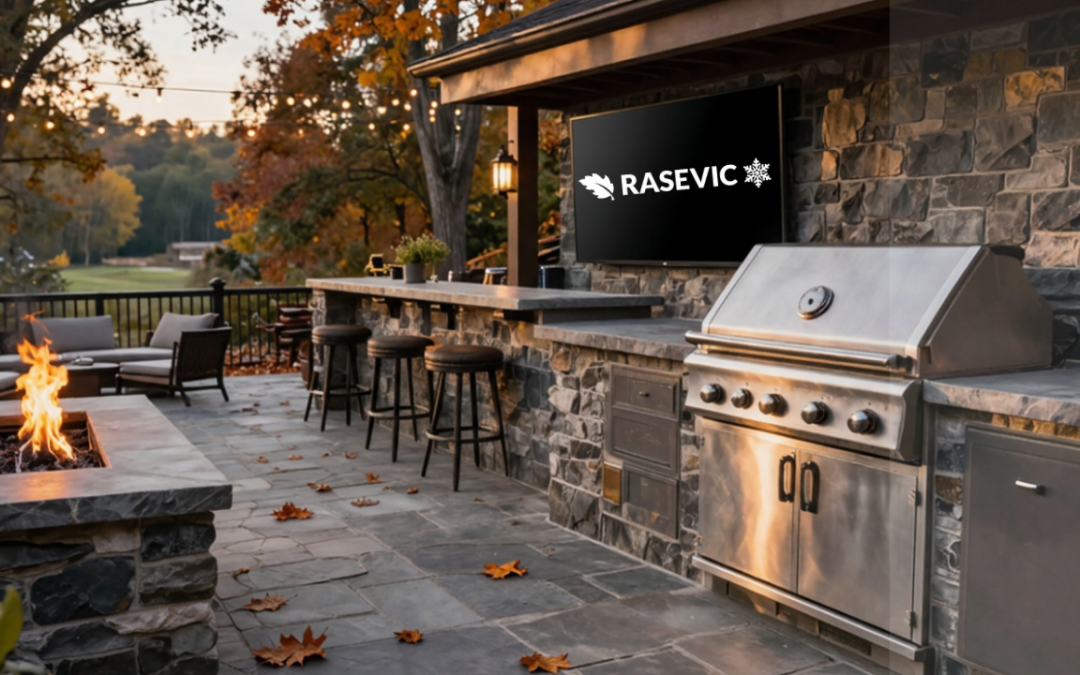
Fire pits and outdoor fireplaces tend to become the center of a gathering space because they make conversation easy and extend the outdoor season into cooler evenings. For a homeowner, that can mean a backyard that friends actually want to visit. For an apartment community, HOA or commercial property, it can mean an amenity that keeps people on-site and engaged rather than heading elsewhere.
Pergolas Add Structure and Comfort
Comfortable outdoor spaces need more than seating. They need definition.
Pergolas and other shade structures help define an outdoor room while offering relief from direct sun, and they give a space a sense of permanence that a few scattered chairs can’t. In a backyard, a courtyard or an apartment common area, a well-placed pergola signals that the space was designed to be used – not just filled in.
Bringing It All Together
None of these elements work as well in isolation as they do together.
A patio feels more finished with the right seating around it. A fire feature performs better when it’s placed within the flow of the larger space rather than off to the side. Lighting keeps a gathering going after dark and plantings soften the hard edges of stone and pavers so the whole area feels settled rather than newly built.
It’s also worth remembering that a gathering space doesn’t exist on its own. As we covered in Part 1, a fountain, pond or waterfall placed near a patio or fire feature adds another layer entirely – sound, movement and a focal point that makes the space feel complete rather than assembled from separate parts.
When every piece is designed as part of one plan, the result reads as a destination rather than a series of individual purchases.
For Homeowners: From Backyard View to Everyday Destination
For homeowners, the right gathering space turns a backyard from something to look at into somewhere to live.
A well-placed patio and fire feature give a family a reason to eat dinner outside instead of at the kitchen table, or to host friends without needing to plan around it. Over time, these spaces tend to become the default setting for holidays, birthdays and ordinary weeknights alike – not because they were built for a single event, but because they were built to be lived in every day.
For Communities and Commercial Properties: Amenities People Actually Use
For HOAs, apartment communities and commercial properties, a gathering space has to do more than look attractive. It should give residents, tenants, employees or visitors a reason to pause, connect and return.
A courtyard with a fire pit does more to build community than a courtyard with a bench and some shrubs. A shaded pergola near a clubhouse gives residents somewhere to actually spend an evening instead of passing through. For businesses, an outdoor break area or meeting space can support employee wellbeing and give visitors a stronger impression of the property than a lobby ever will.
Many properties compete on the same list of amenities. Fewer of them offer outdoor spaces people genuinely want to use – and that difference tends to show up in leasing decisions, resident satisfaction and how a property is talked about.
What’s Next
In the final installment of the RASEVIC Landscape Design Series, we’ll turn to outdoor kitchens and entertainment areas – the features that keep a landscape in use well into football season and beyond.
Let’s Build a Spot Worth Gathering In
At RASEVIC, we believe the best outdoor spaces are designed around the people who’ll actually use them. Whether you’re picturing a private backyard retreat, a community amenity or an outdoor space for employees and visitors, our team can help you design something that’s functional, well-built and worth spending time in.
Contact RASEVIC today to schedule a design consultation and turn an underused backyard, courtyard or common area into a place people actually want to gather.