By October, your snow and ice provider's routes, crews, equipment, and material inventories are largely set. The final step is confirming the information only you can provide: how your property operates, which areas matter most, and what must remain accessible when a...
Every September, the same question starts making the rounds: what are the almanacs saying about the winter ahead? Property managers and homeowners across the DMV read the headlines, compare the maps and try to make sense of what it might mean for their properties....
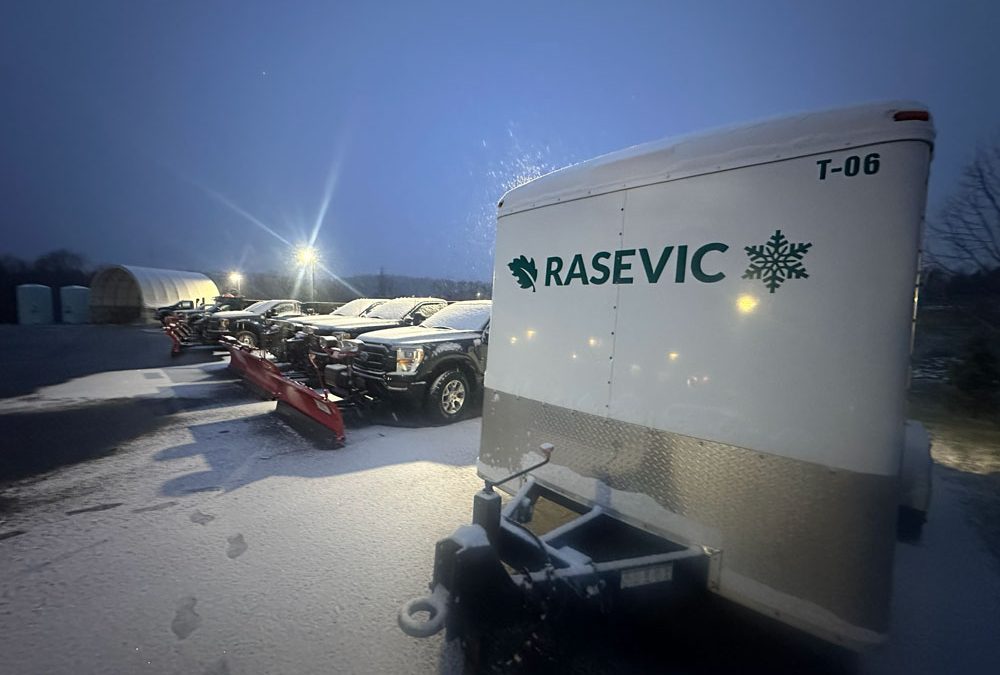
When winter weather hits a commercial property, every decision made months earlier shows up at once: whether entrances stay open, lots remain accessible, crews arrive on time and ice is treated before it becomes a hazard. Most people picture snow and ice management as...
On paper, most snow contractors offer the same services: plowing, salting, sidewalk clearing and storm response. So why do some winter service relationships feel routine, while others become partnerships property managers rely on year after year? It isn't the...
Most people don't think about snow removal in the spring or summer. That's completely understandable - it's warm out, there are a hundred other things on your plate and winter feels like someone else's problem. But if last season left you with any lingering questions...
When the Snow Stops: The Real Winter Challenge Begins
January is when property managers set the tone for the rest of the winter.
In the Washington, D.C. region, success isn’t measured by how much snow falls, but by how well persistent cold is managed. For facility teams, this season rewards consistency and steady attention—especially when subfreezing temperatures can extend the presence of ice even after modest snowfall.
January: The Cold‑Weather Stress Test
January underscores the importance of a well-structured ice management plan. With daytime temperatures hovering near freezing and overnight lows dipping below, meltwater can refreeze repeatedly. Instead of a single “cleanup window,” conditions call for ongoing professional oversight that adapts to each freeze–thaw cycle.
Following a colder-than-usual December, surfaces like pavement and loading docks enter January already chilled. This simply means our teams fine-tune treatments more precisely, monitoring conditions to ensure meltwater never compromises site safety. Early outlooks suggest January 2026 may bring slightly more snowfall than February – a modest but meaningful shift. Combined with sustained cold, it reinforces the value of a proactive approach that keeps properties consistently safe and fully functional.
Meteorologists expect January temperatures to run 1–3°F below average across the DMV. In these conditions, even light snow can linger. That’s why our crews remain active before, during, and well after each event, ensuring our clients’ commitments to safety and continuity are fully supported.
The Numbers: Two Decades of January Volatility
Over the past 20 years, January has demonstrated the D.C. area’s familiar winter variability. These well-documented patterns form the foundation of how our winter plans are built, refined, and executed -delivering reliability and predictability for our clients.
Representative January Events
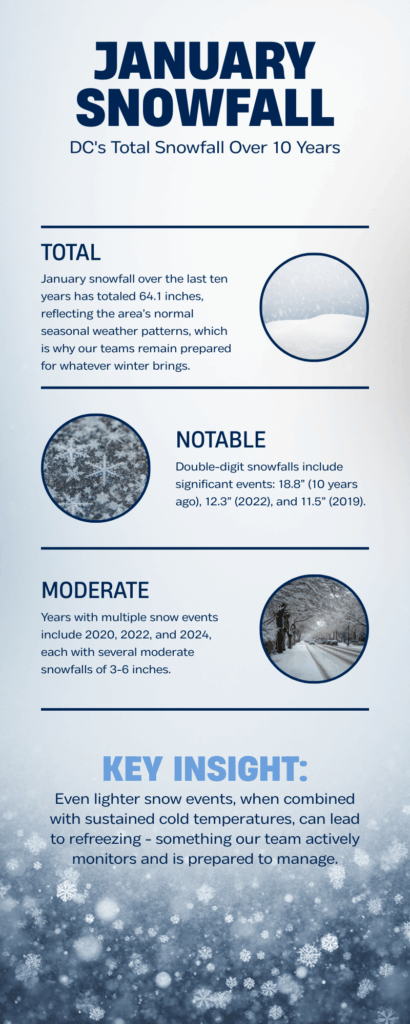
January 5–6, 2025: A 6–8 inch snowfall followed by extended cold, managed through precise follow-up treatments.
January 2022: Several 3–6 inch events paired with low temperatures, requiring attentive monitoring over multiple days.
January 2020 & 2024: Moderate snowfalls that reinforced the importance of sustained operational support for commercial properties.
Long-Term January Averages
Average January snowfall: 5–6 inches
Cumulative January snowfall (last 10 years): 64.1 inches
In the D.C. region, performance is shaped less by storm totals and more by how long cold conditions persist. That’s why our experienced teams emphasize continuous readiness – ensuring your property is as functional on day three as it was on day one.
Operational Hot Spots: Where Refreeze Shuts Things Down
Every property has key areas that benefit from extra care during January. Managed proactively, these locations remain productive and accessible through the coldest days:
Consistently Shaded Access Points: North-facing entrances and garage ramps thaw more slowly. We monitor them closely to maintain safe access.
Loading Docks and Trailer Yards: As logistical hubs, these areas often sit in shadows. We prioritize early inspection and preventive treatment to keep deliveries moving.
Drainage and Melt Paths: Roof and dock drains can channel meltwater into paths and walkways. We continuously manage these flow points to prevent refreeze from interfering with movement.
Ramps, Bridges, and Elevated Connections: Elevated surfaces cool quickly. We treat these checkpoints proactively to prevent icing during peak activity.
Internal Roadways and Fleet Corridors: Routine observation helps prevent isolated refreeze that could impede multi-tenant or industrial traffic.
Cold-Weather Control: Built For Uptime In Freezing Conditions
Winter success comes from maintaining consistent access and safe movement all day long. RASEVIC Snow plans are designed around how your property operates – not just how much snow falls.
Site-Specific Micro-Climates: We prioritize ramps, docks, and access routes based on how your site holds frost and shade.
Precision Material Application: Treatments align with pavement temperatures to preempt refreeze before it impacts operations.
Proactive Return Visits: We ensure loading and dispatch areas stay clear through the full freeze–thaw cycle, not just immediately after a storm.
Our focus is on reliability, throughput, and seamless operations – keeping your facility ready for your team, your customers, and your schedule.
What Comes Next: Preparing for Ongoing Winter Conditions
January in the D.C. area rewards a proactive, consistent approach to refreeze management. RASEVIC Snow, supported by our in-house salt distributor (Snow & Ice Salt & Chemicals Unlimited, LLC), operates around the clock to support commercial and industrial clients. Our mission goes beyond snow removal – we help maintain the circulation and daily activity that define your business success.
As 2026 gets underway, securing dedicated winter coverage ensures your critical areas receive continuous attention and care. We’re here to provide the confidence and continuity that keep your property safe, accessible, and fully operational all season long.
Secure Your Winter Operations Coverage Today: CLICK HERE!