When winter weather hits a commercial property, every decision made months earlier shows up at once: whether entrances stay open, lots remain accessible, crews arrive on time and ice is treated before it becomes a hazard.
Most people picture snow and ice management as plow trucks moving through parking lots in the middle of a storm. What they don’t see is the planning that makes those operations work – and most of that planning doesn’t happen in December. It happens in June, July and August, while everyone else is thinking about anything but winter.
By the time the first storm hits, the goal isn’t to create a plan. It’s to execute one that’s already been built, tested and staffed for months.
Winter Is Won or Lost in the Summer
The strongest snow programs aren’t built during a storm. They’re built during the offseason and that offseason work is where RASEVIC invests most of its energy.
Long before the first forecast mentions snow, we’re already mapping routes, assigning teams, preparing equipment and securing materials for the season ahead. This is not a light touch-up between winters. It is a structured, months-long build-out that determines how every property performs once conditions turn.
That work breaks down into a few core pieces:
- Route and property mapping: Every property we service gets reviewed and mapped – not once, but continuously. We’re identifying freeze-prone zones, high-traffic entrances, drainage patterns and access points specific to that site and building routes around how the property actually functions, not a generic template applied to it.
- People Prep: Crews and supervisory personnel are assigned to specific properties or routes well ahead of the season, so the people arriving in January already understand the site. They are not learning it for the first time in the middle of a storm.
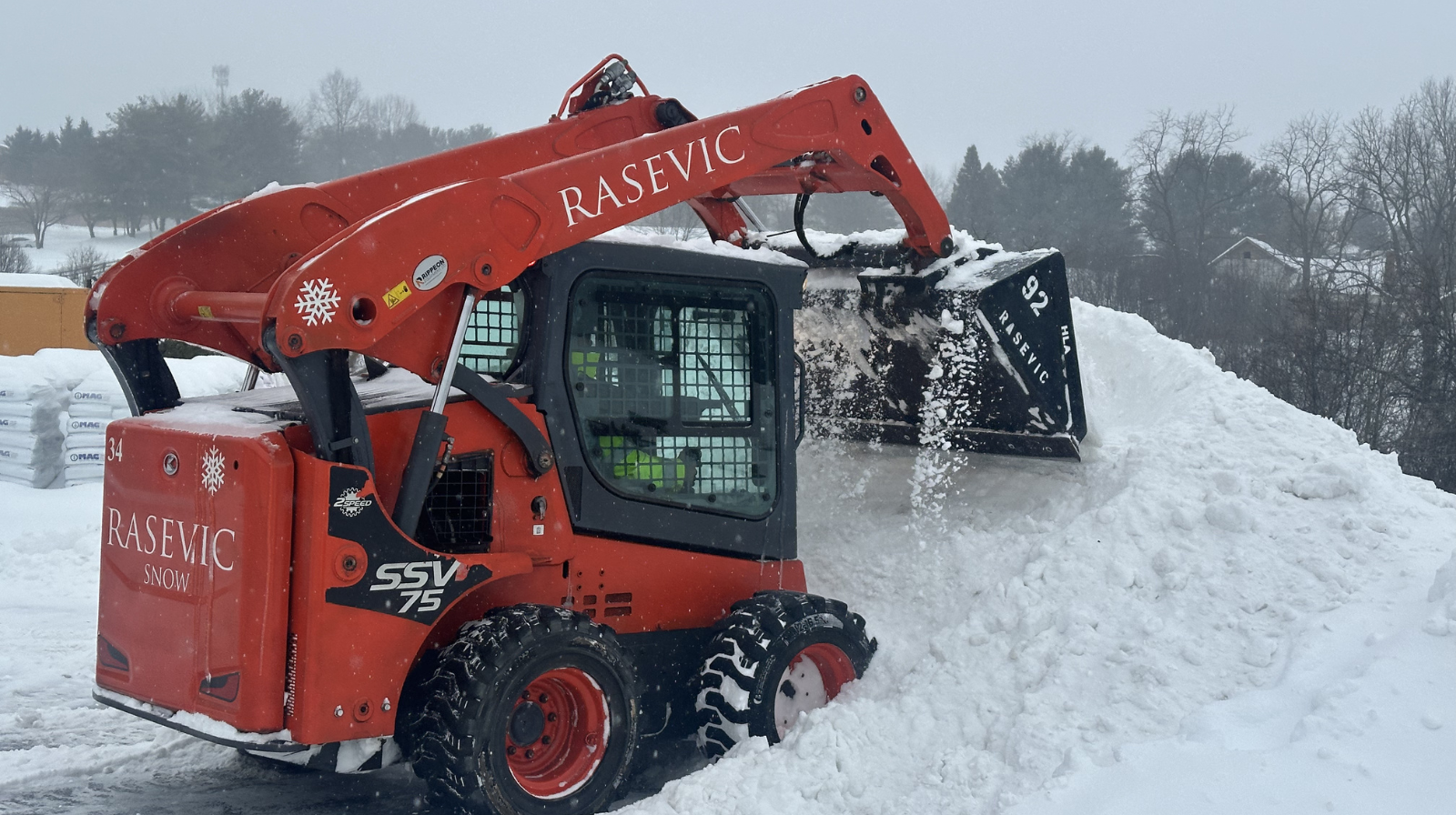
- Fleet readiness: Plow trucks, loaders and snow relocation equipment go through inspection and maintenance over the summer, so nothing is being diagnosed or repaired for the first time when a storm is already forecast.
- Materials and supply: Through our dedicated supply partner, Snow & Ice Salt & Chemicals Unlimited (SISCU), we secure and maintain access to bulk salt, liquid brine and deicing materials well ahead of the season – including the volume needed to get through high-demand stretches when regional supply gets tight.
None of this gets assembled once winter arrives. It’s already in place.
Every Property Gets Its Own Winter Playbook
One of the biggest misconceptions about commercial snow removal is that every site is serviced the same way. In reality, effective winter management starts with understanding how a property functions on a normal day: where traffic bottlenecks, which entrances see the most pedestrian activity, where water collects after rain, which surfaces freeze first and how vehicles, deliveries, employees, residents and visitors move through the site.
RASEVIC’s planning process includes site reviews, traffic-flow analysis, drainage observation, access evaluations and operational planning based on how the property is actually used. For property managers, commercial owners, federal facilities and residential communities, that means a winter strategy built around real site conditions – not generic assumptions.
Why DMV Planning Can’t Be an Afterthought
Maryland, Washington, DC and Northern Virginia winters are rarely predictable, which is exactly why this offseason build-out matters as much as it does.
Washington’s average seasonal snowfall is 13.7 inches, based on the National Weather Service’s 1991–2020 climate normal at Reagan National Airport. But that average hides the real story: the region’s snowiest winter on record produced 56.1 inches, while some winters have brought next to nothing. A property can go two or three mild seasons in a row and then get hit with a storm that dumps half a foot overnight.
A provider that only staffs, stocks and stages for an “average” winter is unprepared for much of what this region can produce. That’s why RASEVIC treats summer preparation as the season that determines winter performance – not a formality before the real work starts.
Preparation Continues as the Forecast Develops
The summer build-out doesn’t stop once the calendar flips to fall. As storms begin to develop, our operations team monitors timing, pavement temperatures, precipitation type and potential storm transitions. That intelligence determines whether pretreatment is appropriate and what crews, equipment and materials need to be staged in advance of a specific event.
Anti-icing treatments like brine are most effective before snow and ice bond to pavement. Reducing that bond early improves clearing efficiency and helps properties maintain safer, more manageable conditions from the moment a storm begins.
As storm confidence increases, crews, equipment and support personnel are positioned throughout Maryland, DC and Northern Virginia – across Montgomery, Howard, Prince George’s, Baltimore, Frederick and Carroll Counties; Fairfax, Arlington and Loudoun Counties; and DC’s own commercial, federal and residential corridors.
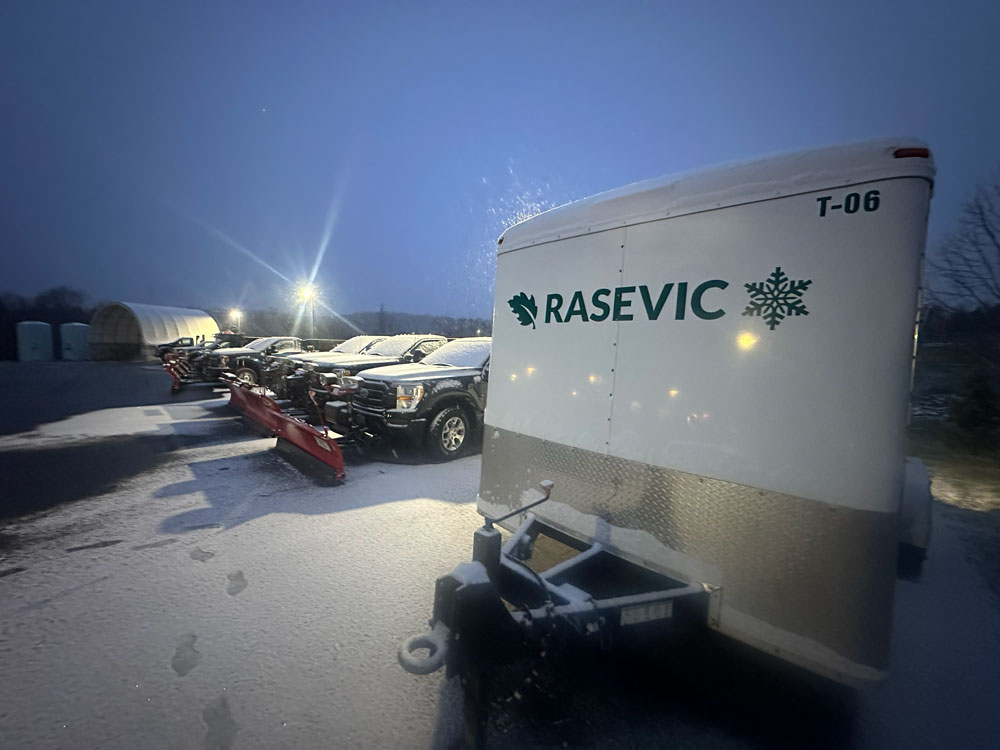
Plow trucks, loaders, supervisors and deicing materials are assigned before conditions deteriorate, positioned close to the properties they serve rather than dispatched from a distant yard after a storm is already underway.
The operation is running long before snow starts accumulating.
The RASEVIC Route
At RASEVIC, a route is more than the path a plow truck follows during a storm. It begins with property mapping and continues through staffing, fleet readiness, material planning, weather monitoring, crew assignments and equipment staging. By the time winter weather arrives, the route has already been built, tested and refined – not improvised.
The best snow events are often the least noticeable: entrances remain accessible, parking lots stay functional, communication is clear and the property continues operating as intended. Those are usually the seasons that required the most preparation, not the least.
Because the best snow operations aren’t created when the forecast changes. They’re built months before the first snowflake falls.
If you’re responsible for keeping a property accessible, safe and operational this winter, now is the time to review your snow and ice management plan. Contact RASEVIC Snow Services to learn how our year-round approach to mapping, staffing, fleet readiness and supply planning delivers more predictable winter performance across Maryland, Washington, DC and Northern Virginia.
Sources
- National Weather Service, 1991–2020 Climate Normals, Ronald Reagan Washington National Airport (DCA)
- The Washington Post, “DC Snow, Explained: Averages, Extremes and Trends”
- Current Results, “Washington DC Snowfall Totals & Snow Accumulation Averages” (compiled from National Weather Service data)