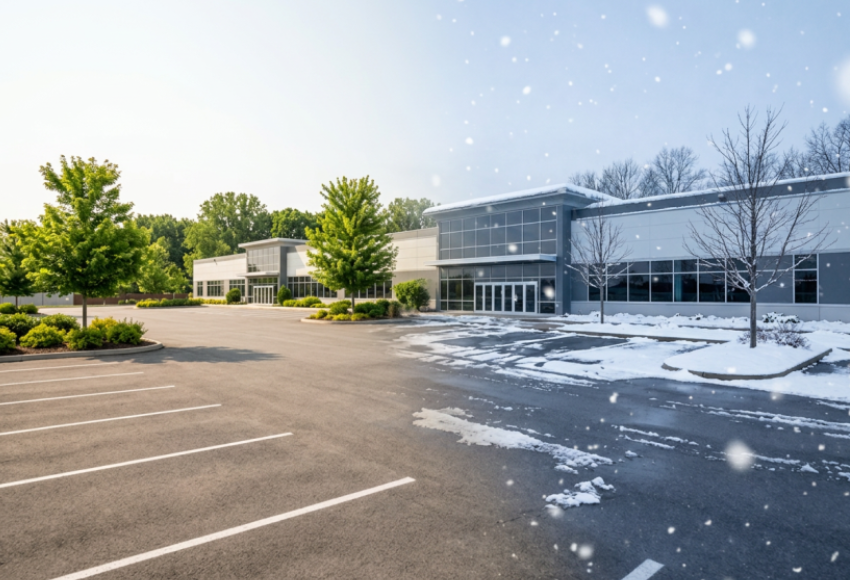
By October, your snow and ice provider's routes, crews, equipment, and material inventories are largely set. The final step is confirming the information only you can provide: how your property operates, which areas matter most, and what must remain accessible when a...
Every September, the same question starts making the rounds: what are the almanacs saying about the winter ahead? Property managers and homeowners across the DMV read the headlines, compare the maps and try to make sense of what it might mean for their properties....
When winter weather hits a commercial property, every decision made months earlier shows up at once: whether entrances stay open, lots remain accessible, crews arrive on time and ice is treated before it becomes a hazard. Most people picture snow and ice management as...
On paper, most snow contractors offer the same services: plowing, salting, sidewalk clearing and storm response. So why do some winter service relationships feel routine, while others become partnerships property managers rely on year after year? It isn't the...
Most people don't think about snow removal in the spring or summer. That's completely understandable - it's warm out, there are a hundred other things on your plate and winter feels like someone else's problem. But if last season left you with any lingering questions...
Freezing Temperatures Across the DMV: Why Refreeze Is the Real Winter Threat
When the snow stops, winter hazards don’t. Across DC, Maryland, and Virginia, some of the most dangerous winter conditions occur after the plows leave – when melting snow refreezes and turns parking lots, sidewalks, loading areas, and access roads into ice.
For facilities that operate overnight, before sunrise, or 24/7, refreeze isn’t a weather issue – it’s an operational and liability risk.
In the DMV, sustained sub-freezing temperatures make refreeze a certainty, not a possibility. At RASEVIC Snow, we’ve protected commercial, industrial, and federal properties for 35+ years, remaining on duty 24/7 before, during, and after every storm to keep facilities safe, compliant, and operational long after the last snowflake falls.
Why Freezing Temps Matter – Even Without New Snow
When daytime temperatures rise just enough to melt snow and ice, moisture spreads across pavement. Once the sun sets – or shaded areas cool – that water freezes again, forming invisible black ice that blends seamlessly with asphalt and concrete. For property and facility managers, this is one of winter’s largest slip-and-fall and claims risks, especially at high-traffic and mission-critical sites.
It’s also important to remember that pavement temperature often lags air temperature. Even when the air briefly warms above freezing, the ground can remain cold enough to cause instant icing the moment moisture contacts the surface – a common challenge at loading docks, internal roadways, and secure entrances.
High-Risk Areas for Refreeze
North-Facing Entrances & ADA Walkways: Limited sunlight keeps surfaces frozen longer, increasing exposure for staff and visitors
Downspouts & Runoff Paths: Melting piles create narrow “ice rivers” across sidewalks and pedestrian routes
Speed Bumps, Ramps & Low Spots: Trapped water re-freezes into smooth, hard-to-see hazards
Loading Docks, Freight Lanes & Trailer Yards: Shade, traffic, and heavy use increase slip risk during shift changes and early-morning dispatch
Internal Roadways & Multi-Tenant Access Points: Refreeze creates unpredictable hazards across industrial parks and shared facilities
Proactive Ice Control Is the Difference
Professional ice management isn’t just about reacting to snowfall. It’s about anticipating temperature swings, protecting uptime, and managing the refreeze cycles that follow – especially for facilities where delays, injuries, or restricted access aren’t an option.
Our cold-weather strategy includes:
Pre-treating high-traffic and critical access areas ahead of overnight freeze cycles
Applying the correct salt, treated materials, or brine based on pavement temperature, not air temperature
Re-treating during freeze/thaw periods to stay ahead of recurring icing
Continuous communication, documentation, and 24-hour weather monitoring throughout every weather event
Why Materials Matter in Extreme Cold
Not all ice-control products perform the same when temperatures drop. Standard rock salt quickly loses effectiveness once pavement temperatures fall below 15–20°F, increasing application waste and response times.
That’s why our crews rely on appropriate temperature blends, treated salts, and liquid applications designed to continue working in deep freezes. Every application is intentional, efficient, and tailored to the micro-climates found across government campuses, data centers, distribution facilities, and commercial properties throughout the DMV.
Stay Ahead of the Freeze
For property owners, facility managers, and commercial real estate executives, the best time to confirm an ice management plan is before ice forms. Waiting until conditions worsen can lead to delayed response times, increased liability exposure, tenant complaints, and avoidable downtime.
At RASEVIC Snow, we remain open 24/7 – before, during, and after every storm – to keep your properties safe, accessible, and operational no matter how cold it gets.
Let’s make sure your property stays protected this winter.
To schedule a refreeze risk assessment today: CLICK HERE!