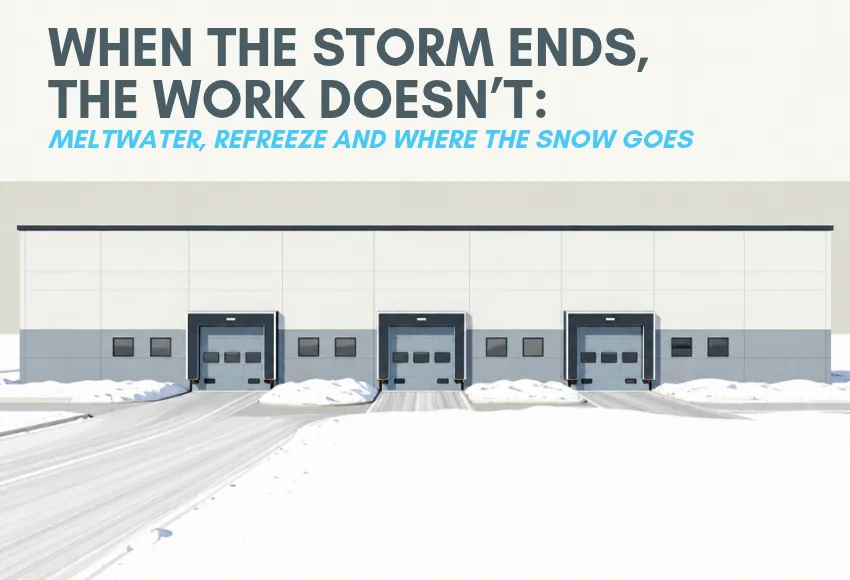
Most people judge a winter storm by when the snow stops falling.
For a site that can’t afford a bad morning, that’s often when the real work starts.
The Problem Arrives Hours Later
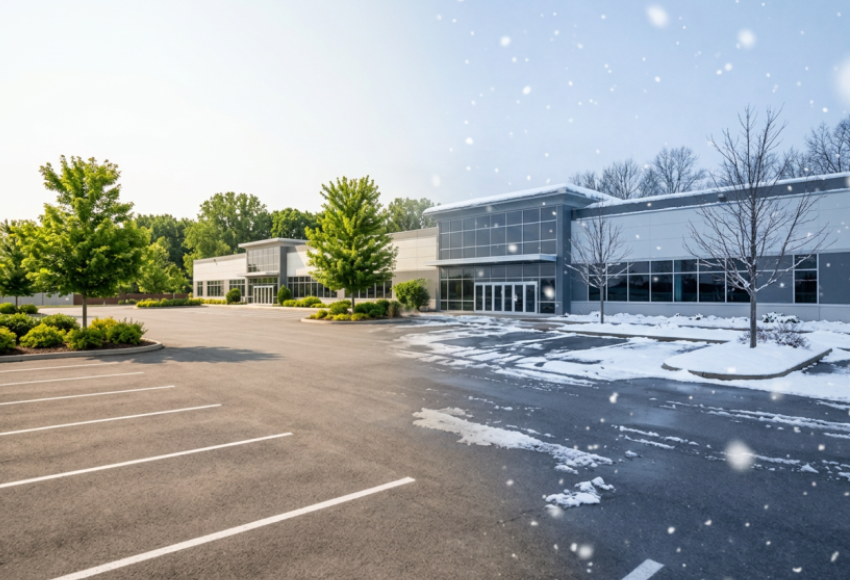
A parking lot can look completely clear of snow at 3 p.m. By 5 a.m., refrozen meltwater may have left a thin layer of ice.
During the day, melting snow runs toward drains, low spots, dock aprons, entrances, and walkways. When temperatures drop overnight, that water refreezes, often as a thin, hard-to-see layer, right where the next shift walks and drives in.
In Maryland, Washington, DC, and Northern Virginia, temperatures regularly swing above and below freezing. That cycle can repeat for days after a single storm.
Every Snow Pile Is Future Meltwater
Most people see snow piles as storage. Experienced snow professionals see where the water will go.
A pile near a loading dock, entrance, storm drain, or travel lane can keep affecting a site for days or even weeks after the storm. That’s why storage areas should be chosen before winter, not in the middle of a storm.
When we plan snow storage, we look at:
- Drainage patterns and where meltwater will run
- Traffic flow and equipment access
- Loading docks and emergency routes
- How much snow the site may accumulate over a season
- Available space, and what happens when it runs out
The goal isn’t just finding a place to put snow. It’s knowing how that decision will affect the property after the storm is over.
After the Snow Stops, the Checks Begin
Commercial ice management doesn’t end when the plows leave. The priority areas are the ones where meltwater collects and refreezes first:
- Dock aprons and truck courts
- Entrances and sidewalk transitions
- Low points and drainage paths
- Shaded pavement that stays frozen longest
The forecast drives the timing. A warm afternoon followed by a cold night means these areas need attention before the next shift arrives, not after someone reports a problem.
What This Means for Mission-Critical Sites
For a typical property, refreeze is a nuisance. For others, it’s an operational problem:
- Distribution centers: trucks run around the clock. One icy dock approach or trailer yard can slow shift changes and shipments.
- Healthcare facilities: emergency entrances, ambulance routes, and patient drop-offs can’t wait for a slip to be reported.
- Data centers and critical infrastructure: technician, delivery, and support access has to hold at 3 a.m. as well as at noon.
- Government facilities: essential-employee entrances and emergency vehicle paths need to be usable whenever the facility is.
Questions to Ask Your Snow Provider Right Now
- Where will snow be stacked on our property, and where will the meltwater go?
- Who checks the site after the snow stops, and when?
- How is the overnight forecast used to time treatments?
- What happens when we run out of storage space?
- What will we receive afterward to show what was done?
Clear answers mean there’s a plan. Vague ones are worth knowing about before the first storm, not after it.
How RASEVIC Approaches It
Our approach to snow and ice management doesn’t stop when the snow does. Our team is available 24/7 before, during, and after every winter event.
We identify snow storage areas and review drainage patterns before the season, then coordinate ice control and monitor site conditions as temperatures change, so the property stays safe, accessible, and operating.
For a closer look at our planning process, read What Happens Before the First Snowflake Falls? and learn more about our Ice Control services.
Let’s Get Your Property Ready
Every site has its own layout, traffic patterns, drainage, and priorities. The best time to review them is before winter weather arrives.
We offer complimentary pre-season consultations to walk your property, map out where snow and meltwater will go, review priority areas, and build a plan that fits how your facility operates.
Schedule your complimentary pre-season consultation.
Call: 301-986-6900
Email: orders@rasevic.com
Web: https://rasevic.com/snow-consultation
Serving commercial properties, healthcare facilities, industrial sites, government facilities, distribution centers, HOAs, and mission-critical operations throughout Maryland, Washington, DC, and Northern Virginia.