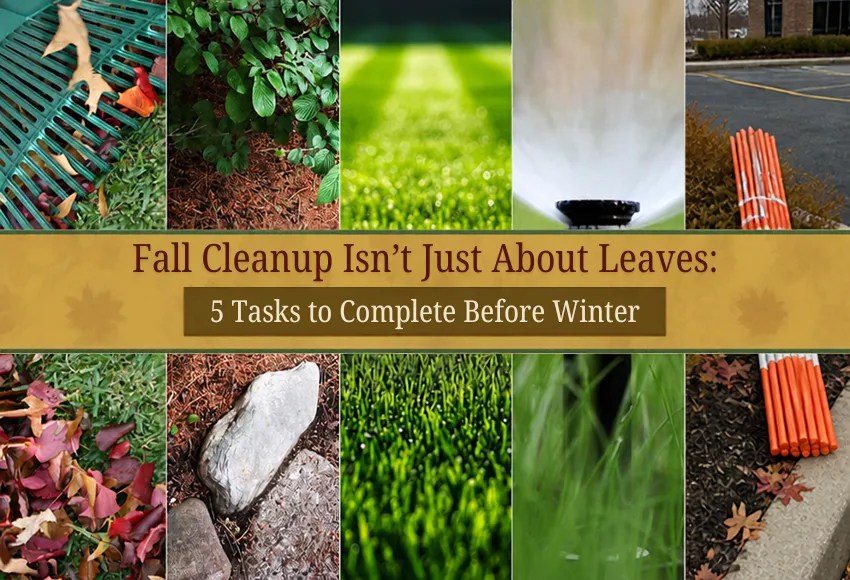
Ask most people what fall cleanup means and they’ll say leaves. Leaves matter, but they’re the most visible job on the list, not the most important one. What gets done over the next few weeks shows up in March: properties that go into winter clean and drained are ready to grow, and the rest start spring with repairs.
That’s especially true this year. After a summer of heat and drought, many properties across Maryland, Washington, D.C., and Northern Virginia are heading into winter with turf and plants that have less in reserve than usual. Whether you manage a commercial site, run an HOA, or look after your own property, here are five tasks worth finishing before the ground freezes.
1. Stay ahead of the leaves
A light layer of leaves on turf is fine. A thick, wet mat that sits through a few rainstorms is not. It blocks light, holds moisture against the grass, and by spring the thin patches show exactly where it sat. The fix is regular cleanup during peak leaf drop instead of one big removal at the end. Light accumulations can be mulch-mowed back into the turf, and heavy ones should be hauled away.
Pay particular attention to storm drains, catch basins, downspout outlets, and swales. A clogged drain is one of the easiest ways to end up with standing water, and standing water that freezes becomes an ice problem on walkways and drives.
2. Clean up beds before they go dormant
Spent annuals, declining foliage, and fallen branches give pests and disease a place to overwinter, and weeds that go to seed now become next year’s weeding. Remove dead material, pull weeds, cut back the perennials that benefit from it (some are better left standing, depending on the plant), and redefine the bed edges.
Beds that go into winter clean take far less time to bring back in spring, when every crew is busy. They also make the difference between a property that looks cared for in January and one that looks forgotten, which matters just as much at a corporate entrance as it does at a front walk.
3. Give turf a last push
Cool-season grasses keep building roots well into late fall, so lawn care isn’t over yet. Keep mowing while the grass is growing, and lower the cutting height gradually for the last cuts, since long grass that gets matted under leaves or snow is more prone to winter disease. A late-season feeding helps turf store energy and green up sooner in spring, though product and timing depend on the turf type, so ask your provider.
If you aerated and overseeded this fall, keep those areas watered as conditions require. Our recent post on how irrigation affects that work explains why: [link].
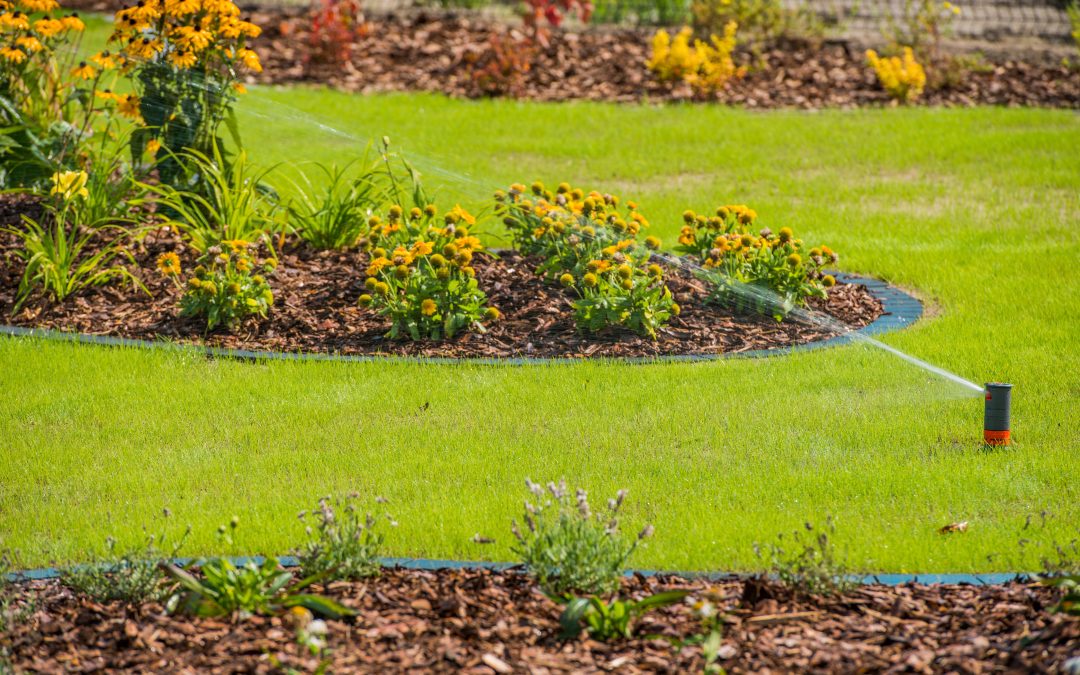
4. Winterize the irrigation system
Water left in the lines, valves, and backflow preventer expands when it freezes and can crack components. Winterization comes down to four steps:
- Shut off the water supply
- Blow out each zone with compressed air
- Drain and protect the backflow assembly
- Set the controller for the off-season
The tricky part is that freeze damage usually stays hidden until spring startup, when repairs cost more and everyone is calling at once. First frost can arrive anywhere from mid-October to mid-November depending on location, and blowout schedules fill as it gets close, so book it now.
5. Walk the property with winter in mind
Look up, then look down. Overhead, check for dead or damaged limbs above walkways, drives, parking, and roofs, plus low branches near drive aisles. This summer’s heat and drought stressed a lot of trees, so they deserve a closer look. At ground level, look for trip hazards on paths and steps, and for spots where water pools, since those become ice.
Then think about how snow removal will interact with the landscape. Plows and shovels damage curbs, bed edges, irrigation heads, and low plantings that vanish under snow, and de-icers can stress plants near entries and walks. Marking vulnerable features with stakes, and sharing a site plan with whoever handles snow before the first storm, prevents most of that. Commercial sites also need to decide where snow will be stored. On a residential property, the focus is protecting driveway edges and the plantings near the entry. If landscape and snow are handled by the same provider, that handoff is simpler.
Do it now, enjoy it in spring
None of this is exciting work, but it’s what makes spring easier. If you’d like a second set of eyes, our team will walk your property, point out what’s worth doing now and what can wait, and put together a plan around your goals and budget.
Request a fall consultation [link] or call 301-986-6900.
Serving commercial, HOA, government, and luxury residential properties throughout the DMV region.